Buying a home is one of the most significant financial decisions you will ever make, and understanding the numbers behind it is crucial. The monthly mortgage payment is often the largest recurring expense for homeowners, yet many buyers focus only on the total price of the property. When you break down the actual cost, you realize that the sticker price is just the beginning. Interest, property taxes, and insurance all play a role in what you pay each month.
Learning how to calculate your monthly mortgage payment does not require a degree in finance or advanced mathematics. With a clear formula and a bit of practice, you can estimate your costs accurately before you ever step foot in a bank. This skill empowers you to compare loan offers, understand the impact of interest rates, and set a realistic budget. By the end of this guide, you will not only know the formula, but also understand the components that make up your payment and how small changes can affect your long-term financial picture.
The Core Formula for Mortgage Payments
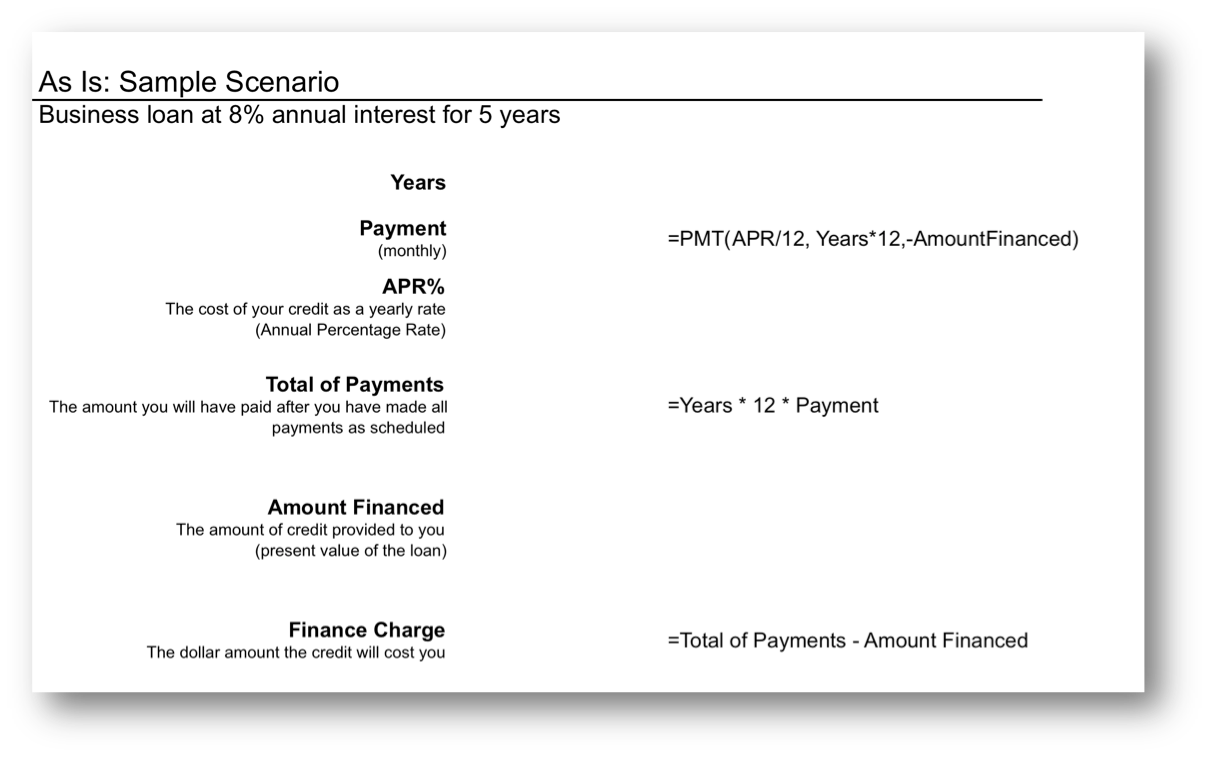
The standard formula used by lenders and financial institutions is known as the amortization formula. It calculates a fixed monthly payment that combines both the principal (the amount you borrowed) and the interest, spread evenly over the life of the loan. The formula looks like this:
M = P × [r(1 + r)^n] / [(1 + r)^n – 1]
In this equation, M is your total monthly payment for principal and interest. P is the principal loan amount, r is your monthly interest rate (your annual rate divided by 12), and n is the number of monthly payments (the loan term in years multiplied by 12). While this formula looks intimidating, it becomes straightforward once you plug in your numbers.
Breaking Down the Components
- Principal (P): The amount of money you borrow to buy the home, minus your down payment.
- Interest Rate (r): The cost of borrowing money, expressed as a percentage. This is always quoted as an annual rate, so you must divide it by 12 for monthly calculations.
- Loan Term (n): The number of years you have to repay the loan, typically 15 or 30 years. This number is converted into months for the formula.
For example, if you borrow $300,000 at an annual interest rate of 6% for 30 years, your monthly rate is 0.005 (6% divided by 12) and your total number of payments is 360. Plugging these into the formula gives you a monthly principal and interest payment of approximately $1,799. This is the core payment, before taxes and insurance are added.
Why Your Payment Is More Than Principal and Interest
Most mortgage calculators and lender quotes include more than just the loan repayment. The true monthly cost of homeownership usually includes escrow items, which are funds collected by your lender to pay for property taxes and homeowners insurance on your behalf. This is often abbreviated as PITI: Principal, Interest, Taxes, and Insurance.
Ignoring these additional costs can lead to a severe budgeting error. A home that seems affordable based on principal and interest alone might become a financial strain once you add property taxes, which vary greatly by location and can amount to thousands of dollars per year. Homeowners insurance protects your investment and is required by lenders, so it is a non-negotiable part of the calculation.
In some cases, you may also encounter PMI (Private Mortgage Insurance). This is typically required when your down payment is less than 20% of the home’s value. PMI protects the lender in case you default, and it adds a significant amount to your monthly bill. A clear understanding of these extra fees ensures there are no surprises at closing.
How to Calculate Your Payment Without the Formula
If you prefer not to work with exponents and algebra, there are simpler ways to get an accurate estimate. Most financial institutions offer online mortgage calculators that do the math for you. These tools are free and widely available, but you must know your inputs: loan amount, interest rate, loan term, property tax estimate, and insurance premium.
Another popular method is the interest-factor approach. Many lenders publish a “payment factor” table, which shows the monthly payment per $1,000 borrowed for various interest rates and terms. For example, a factor of $6.00 per $1,000 means that for every thousand dollars you borrow, you pay $6.00 per month. If you borrow $300,000, you simply multiply 300 by 6.00, giving you $1,800. This is a quick mental shortcut, though it is less precise than the full formula.
Regardless of the method you choose, accuracy depends on your inputs. Always double-check your interest rate and confirm whether the rate is fixed or adjustable. A fixed-rate mortgage keeps the same payment for the life of the loan, while an adjustable-rate mortgage (ARM) can change, making future calculations less predictable.
The Impact of Interest Rates on Your Monthly Payment
Interest rates are the single most influential factor in your monthly payment, aside from the loan amount itself. Even a seemingly small difference in rates can translate to hundreds of dollars per month and tens of thousands of dollars over the life of the loan. Understanding this relationship helps you decide whether to lock in a rate now or wait for a potential drop.
Consider a $300,000 loan with a 30-year term. At a 5% interest rate, your monthly principal and interest payment is around $1,610. At 7%, that same loan jumps to about $1,996 per month. Over 30 years, that 2% difference costs you nearly $139,000 in additional interest. This is why shopping around for the best rate is one of the most effective ways to save money.
Your credit score, down payment size, and the overall economic environment all influence the rate you are offered. A higher credit score often unlocks lower rates, while a larger down payment reduces the lender’s risk. To get the best possible rate, compare offers from multiple lenders and consider negotiating fees. For those managing a business or rental property, understanding financial software can also help track these expenses. You might find that a solid Cloud CRM system helps you manage real estate client relationships and financial records more efficiently.
Choosing Between a 15-Year and a 30-Year Mortgage
Your loan term dramatically affects both your monthly payment and the total interest you pay. A 30-year mortgage offers lower monthly payments, making homeownership more accessible, but it costs significantly more in interest over time. A 15-year mortgage has higher monthly payments, but you build equity faster and pay far less interest.
Let’s use a $250,000 loan at 6% interest as an example. With a 30-year term, your monthly payment is about $1,499, and you will pay approximately $289,000 in interest over the loan’s life. With a 15-year term, your monthly payment jumps to about $2,110, but the total interest drops to roughly $129,000. The trade-off is a $611 difference per month versus a $160,000 savings in interest.
Choosing the right term depends on your cash flow and financial goals. If you prioritize a lower monthly obligation to maintain flexibility for investments or savings, a 30-year term is often more suitable. If you want to be debt-free faster and can comfortably handle the higher payment, a 15-year term is a powerful wealth-building tool. Just be sure to factor in other expenses like property taxes when calculating the total monthly cost.
Additional Costs That Affect Your Monthly Budget
Beyond principal, interest, taxes, and insurance, there are other costs that can influence how much you need to set aside each month. Homeowners association (HOA) fees are common in planned communities and can range from modest to substantial. These fees cover shared amenities and maintenance, and they are not optional if you live in a governed community.
Utility bills, maintenance, and repair costs are not included in your mortgage payment, but they should absolutely be part of your monthly housing budget. A good rule of thumb is to set aside 1% to 3% of your home’s value per year for maintenance. While these are variable costs, ignoring them can derail your budget. A clear picture of all expenses prevents financial stress and helps you maintain a healthy debt-to-income ratio, which lenders evaluate when you apply for a loan.
When you are ready to move forward with a purchase, it is also wise to compare different financial tools for managing your money. The same logic applies to business operations; selecting the right software is just as important as choosing the right lender. If you are a real estate professional, learning how to choose the best CRM for your business can streamline your client pipeline and help you track leads alongside your own mortgage calculations.
Practical Tips for Lowering Your Monthly Payment
If the numbers look too high, there are several legitimate ways to reduce your monthly obligation. The most direct method is to increase your down payment. A larger down payment reduces the principal amount you borrow, which lowers both your monthly payment and the total interest paid. It can also help you avoid PMI, saving you even more each month.
Another strategy is to negotiate a lower interest rate. Even a 0.25% reduction can save you thousands over the life of the loan. You can achieve this by improving your credit score before applying, comparing offers from multiple lenders, or paying discount points at closing. Discount points are upfront fees that lower your interest rate, and they make sense if you plan to stay in the home for a long time.
Finally, consider the timing of your purchase. While you cannot control the market, you can control your readiness. Waiting until you have a larger down payment or a stronger credit profile can result in a significantly lower payment. Rushing into a mortgage without proper preparation often leads to higher costs and long-term financial strain.
Conclusion
Calculating your monthly mortgage payment is a vital skill that goes beyond simple arithmetic. It requires an understanding of the principal, interest, taxes, and insurance, as well as the impact of your loan term and interest rate. By mastering the formula and knowing what factors influence your total cost, you can make informed decisions that align with your financial goals.
Whether you are a first-time homebuyer or a seasoned investor, taking the time to run the numbers before you commit will save you money and stress. Use the formula, leverage online calculators, and always account for the hidden costs of homeownership. With this knowledge, you are well-equipped to navigate the housing market with confidence.
Frequently Asked Questions (FAQ)
What is the best way to calculate my monthly mortgage payment?
The most accurate method is to use the amortization formula or an online mortgage calculator. You will need your loan amount, annual interest rate, loan term, and estimates for property taxes and insurance.
Does my credit score affect my monthly payment?
Yes. A higher credit score typically qualifies you for a lower interest rate, which directly reduces your monthly payment. Improving your credit before applying can lead to substantial savings.
How does a larger down payment reduce my monthly costs?
A larger down payment reduces the principal amount you borrow, lowering your monthly payment and total interest. If you put down at least 20%, you also avoid private mortgage insurance.
What is the difference between a fixed-rate and an adjustable-rate mortgage?
A fixed-rate mortgage keeps the same interest rate and monthly payment for the entire loan term. An adjustable-rate mortgage has a rate that can change after an initial fixed period, which means your payment can increase or decrease.
Are property taxes included in my mortgage payment?
They are often included through an escrow account. Your lender collects a portion of your annual property taxes and insurance premiums each month, holds them in escrow, and pays the bills when they are due.
How much house can I afford based on my monthly payment?
A common guideline is that your total housing payment should not exceed 28% of your gross monthly income. This includes principal, interest, taxes, and insurance, so you can work backward from that number to find your maximum loan amount.